The place
Full address, entrance, unit or parking location.
 Let’s talk407-818-1499Call
LockReach / Lock repair
What changed at the door?
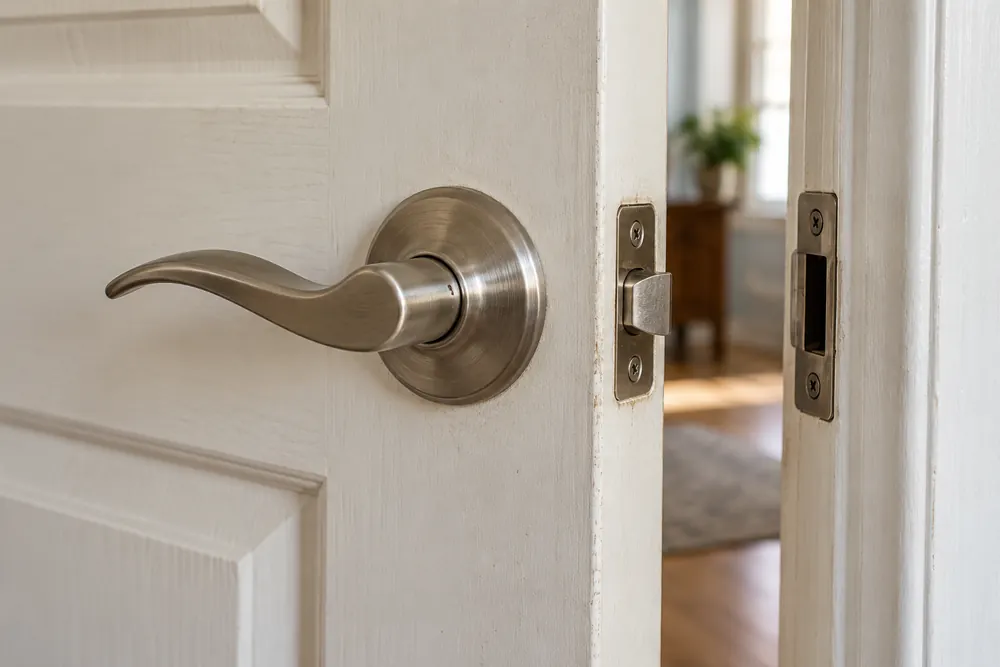
A key that catches, a loose handle or a deadbolt that misses its opening deserves a closer look. The problem may be in the lock, the door or the way they meet.
A lock often gives you a small warning before it becomes difficult to use. Perhaps the key now needs a second attempt, the handle does not return as it did, or the door needs a push before the bolt turns. Those details are useful. “The lock is old” describes its history, but not the fault.
When discussing lock repair in Kissimmee, tell LockReach what the lock does now and what it used to do. Mention whether the change was sudden, followed damage or developed gradually. Also say whether the door can still be secured. A door that cannot lock needs a different priority from an occasional sticking key.
Explain whether the key is hard to insert, hard to turn or hard to remove. If another authorized key works normally, that is worth mentioning. A worn key and a problem inside the lock can produce similar frustration, but they do not necessarily call for the same work.
Avoid forcing a key that bends or feels close to breaking. If a piece is already lodged in the lock, say so during the call and keep the remaining part. Do not add objects to the keyway or take the mechanism apart to find the cause. A description of ordinary use gives a useful starting point without creating another problem.
Same door. Different questions.
A missing key and a sticking lock can look like the same problem from the doorstep. The right conversation starts with the difference.
 Who has a working key?
A change of key for compatible existing locks. Describe the hardware and which doors should work together.
Understand rekeying ↗ What is no longer working?
A key that sticks, a loose handle or a latch that catches needs a conversation about the actual symptom.
Understand lock repair ↗A deadbolt needs to meet its opening in the frame. If it operates differently with the door open and closed, that difference matters. Tell us if you have noticed rubbing, a changed gap, a sagging door or a latch that no longer catches naturally. These observations help connect the symptom to the complete entrance.
Replacing the cylinder alone may not correct a fit problem. The assessment should consider the installed hardware, door and frame together. For a shop or office entrance, also explain who uses it and how frequently the fault occurs. Our commercial locksmith page covers the coordination needed for business doors.
These words describe different outcomes. Repair addresses a fault. Rekeying changes which key operates a suitable lock. Replacement changes the hardware. More than one may be relevant, but none should be chosen simply because the terms sound similar.
If you want lost keys to stop working and the lock also sticks, mention both concerns. Fixing the sticking does not necessarily change key access; rekeying does not automatically fix the sticking. Ask what each proposed part of the job is intended to solve. The condition of the hardware and compatibility of parts affect which options make sense.
Kissimmee's downtown area includes both residential and commercial properties. A request on a familiar street could involve a home entry, an office suite or a rear business door. Include the building or unit number and the particular entrance. If the lock is on an internal door, explain whether the main entrance is accessible.
For a rented property, identify the person who can authorize repair or replacement. If several parties manage the building, clarify who is responsible for the affected hardware. This helps the service conversation stay focused on the door you need fixed, rather than assuming every lock at the address belongs to the same person.
You do not need to remove hardware or identify an internal part. A visible brand, lock type or keypad is useful if already known. Describe any earlier work or part you recently changed. If photographs are requested during the service conversation, show only what can be seen safely and keep private access information out of them.
Before work begins, understand what the quote covers and what remains uncertain until inspection. The pricing guide explains scope and parts questions. If a repair would leave another fault unresolved, ask about that limitation. At handover, the result should be explained in terms of the original problem, not just the part that was changed.
Three details. One better conversation.
Full address, entrance, unit or parking location.
What changed, which keys remain and what still works.
The person who can authorize access and approve work.
A little clarity
Let’s put the details together.
Tell us where you are and what happened.
Ask about availability for your address and request.